
Scissor lifts
Sizing a small scissor lift for a warehouse or workshop
A platform that reaches the light fitting can still be too wide for the workshop door. Start at the work point and trace its route back to storage.
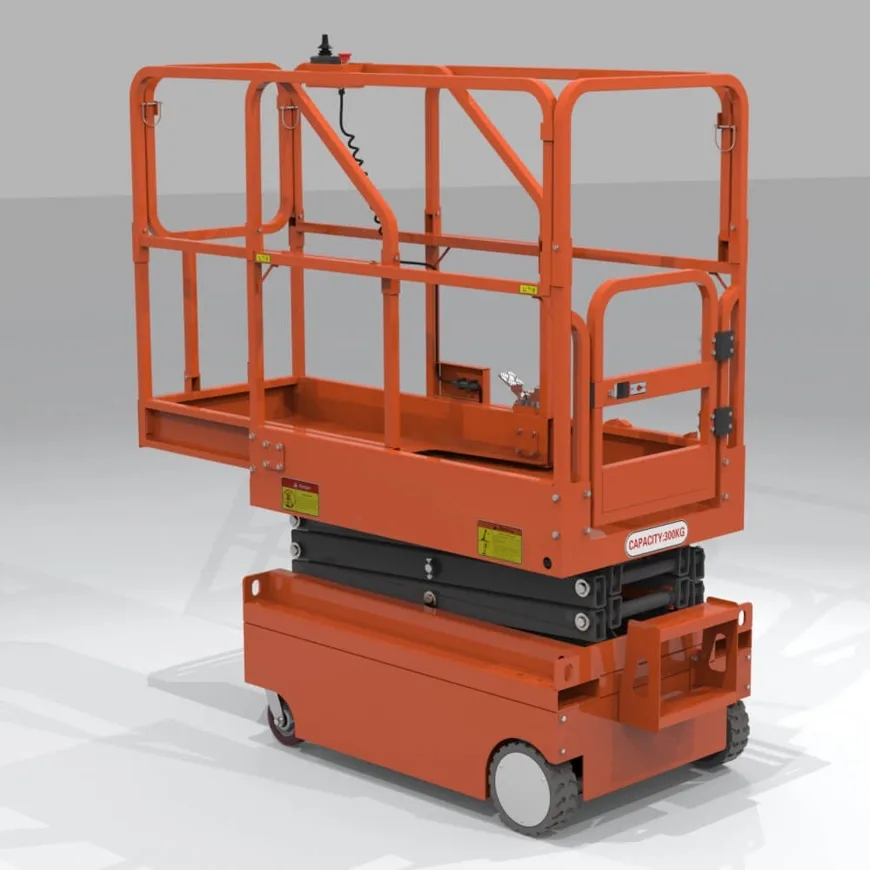
Make a shortlist from the task
Measure the height of the fitting and identify where the deck can stand. Add the operator, tools and parts to the load. Compare the SF push-around range with powered-travel ASF models if the same machine has to move repeatedly between bays.
Map the maintenance round
Mark the deck position at each stop, from luminaires over a clear aisle to signage above shelving. Record the doorway between stops, the distance from parking to the last job and the tools carried at working height. For repeated moves between bays, compare powered travel with the effort of moving the push-around model. A machine staying in a single bay may need a different travel arrangement.
Two 4.8 m configurations
| Series and configuration | Travel | Published main platform load |
|---|---|---|
| SF0.2-4.8 | Manual push | 200 kg |
| ASF0.3, 4.8 m | Powered | 300 kg |
Both figures refer to maximum platform height. The difference in payload matters when comparing a lightly equipped technician with a worker carrying replacement parts.
Details to record
- Clear door opening with the door fully open
- Aisle turn at the nearest fixed obstacle
- Usable deck space with the tool case on board
- Distance from the parking point to the last stop on the maintenance round
What should a workshop check first when buying a scissor lift?
Measure the task height, doorways, aisles and turns. Add the people, tools and materials to be carried. Compare platform height, stowed dimensions, working space and rated load before shortlisting models.